Posts

Showing posts with the label Bulk Chemicals

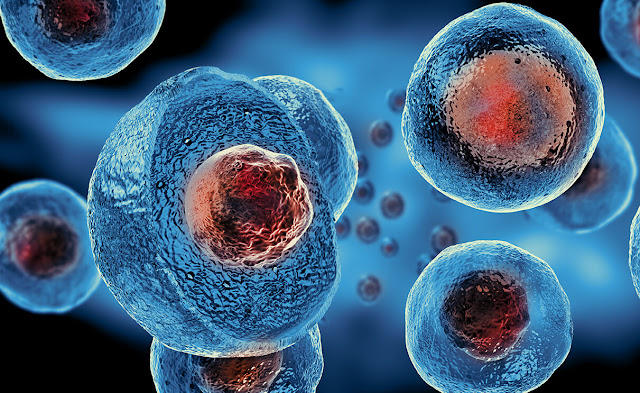
Revolutionizing Healthcare: Unleashing the Potential of Stem Cell Therapy
Image
  Stem Cell Therapy In recent years, the field of healthcare has been witnessing a revolutionary approach with the advent of stem cell therapy. Stem cell therapy holds immense promise in treating a wide range of medical conditions and has the potential to revolutionize the way we approach healthcare. This cutting-edge therapy utilizes the remarkable abilities of stem cells to repair and regenerate damaged tissues, offering new hope for patients suffering from debilitating diseases and injuries. Stem cells are undifferentiated cells that have the unique ability to develop into specialized cell types in the body. They can be derived from various sources, including embryos, umbilical cord blood, and adult tissues such as bone marrow and adipose tissue. This versatility of stem cells makes them a valuable tool in regenerative medicine. One of the most promising applications of Stem Cell Therapy is in the treatment of degenerative diseases such as Parkinson's disease, Alzheimer...

Australia Ammonia: A Key Player in the Global Chemical Industry

Image
  Australia Ammonia Australia Ammonia, one of the leading players in the global chemical industry, is making significant strides in the production and export of ammonia. With its rich natural resources, advanced infrastructure, and strategic geographical location, Australia has emerged as a major hub for ammonia production, catering to both domestic and international markets. Ammonia, a compound consisting of nitrogen and hydrogen, is a vital component in the production of fertilizers, chemicals, and other industrial applications. Australia's abundance of natural gas, which serves as a primary feedstock for ammonia production, positions the country as a prominent player in this sector. Leveraging its vast natural gas reserves, Australia has established several world-class ammonia production facilities, ensuring a steady supply of this essential chemical. The production of Australia Ammonia is characterized by state-of-the-art technology and efficient processes, enabling high-q...

Potassium Peroxymonosulfate: Revolutionizing Water Treatment

Image
  Potassium Peroxymonosulfate Potassium Peroxymonosulfate (KHSO5) is a powerful oxidizing agent widely used in various industries and applications. It is an inorganic compound that consists of potassium, hydrogen, sulfur, and oxygen. With its unique properties, Potassium Peroxymonosulfate finds utility in areas such as water treatment, chemical synthesis, and even as a disinfectant. One of the key characteristics of Potassium Peroxymonosulfate is its strong oxidative capability. It releases active oxygen when dissolved in water, making it an excellent choice for oxidizing organic and inorganic compounds. This feature makes it particularly useful in water treatment processes. Potassium Peroxymonosulfate can effectively remove contaminants, such as algae, bacteria, and viruses, from water sources. Its oxidizing power also helps to break down organic pollutants, ensuring cleaner and safer water supplies. In addition to water treatment, Potassium Peroxymonosulfate plays a crucial ...

Unleashing the Power of Medical Polyoxymethylene in Modern Medicine

Image
  Medical Polyoxymethylene  Medical Polyoxymethylene (POM) is a versatile and highly durable thermoplastic material that finds extensive use in the field of medicine. With its excellent mechanical properties, biocompatibility, and chemical resistance, POM has become a preferred choice for various medical applications. This article explores the characteristics and applications of Medical Polyoxymethylene, shedding light on its significant role in modern healthcare. One of the key attributes of Medical Polyoxymethylene is its exceptional strength and stiffness, which makes it suitable for demanding medical environments. It exhibits low friction and wear properties, making it an ideal material for components such as valves, gears, and bearings in medical devices. The high fatigue resistance of POM ensures its longevity in repetitive use scenarios, ensuring reliable performance over time. Biocompatibility is a crucial aspect when it comes to medical materials, and POM excels ...

Sulfuric Acid is a viscous liquid that is soluble in water

Image
                                                                                                  Sulfuric Acid Market Sulfuric acid (H2SO4), also known as oil of vitriol or hydrogen sulphate, is a dense, colourless, oily, corrosive liquid that is one of the most commercially important of all chemicals. Sulfuric acid is produced industrially through the reaction of water with sulphur trioxide (see sulphur oxide), which is produced through the chemical combination of sulphur dioxide and oxygen via the contact or chamber process. The acid is used in the production of fertilisers, pigments, dyes, drugs, explosives, detergents, and inorganic salts and acids in various concentrations, as well as in petroleum refining and metallurgical processes. Sulfu...

Methanol is one of the simplest molecules with a hindered methyl rotation

Image
                                                                        Methanol Methanol, also known as methyl alcohol and other names, is a chemical and the most basic form of alcohol. It is a flammable, light, volatile, colourless liquid with a distinct alcoholic odour similar to that of ethanol (potable alcohol). Methanol, a polar solvent, was given the name wood alcohol because it was once primarily produced through the destructive distillation of wood. Methanol is now primarily produced industrially through the hydrogenation of carbon monoxide. Pure methanol is a critical component in chemical synthesis. Its derivatives are widely used in the synthesis of a wide range of compounds, including many important synthetic dyestuffs, resins, pharmaceuticals, and perfumes. A significant amount is converted to d...

Ethanolamines are also used in the cosmetics and personal care industries

Image
                                                                                                 Ethanolamines Market Ethanolamine is an organic chemical compound that is also known as 2-aminoethanol, monoethanolamine, ETA, or MEA. The molecule is bifunctional in the sense that it contains both a primary amine and a primary alcohol. Ethanolamine is a colourless, viscous liquid with an ammonia-like odour. ETA molecules are a component of cellular membrane formation and thus a molecular building block for life. It was previously thought that ETA molecules only existed on Earth and on certain asteroids, but evidence was discovered in 2021 that ETA molecules exist in interstellar space. According To Coherent Market Insights " The global ethanolamines...

Succinic Acid is an acidulant that is non-hygroscopic and has a low acid strength

Image
                                                                                           Succinic Acid Market Succinic acid is a dicarboxylic acid having the formula (CH2)2(CO2H)2. The name succinum comes from the Latin word succinum, which means amber. In living organisms, succinic acid takes the form of an anion, succinate, which serves as a metabolic intermediate for the enzyme succinate dehydrogenase in complex 2 of the electron transport chain, which is involved in the production of ATP, as well as a signalling molecule reflecting the cellular metabolic state. It's marketed as E363, a food additive. The tricarboxylic acid cycle produces succinate in mitochondria (TCA). Succinic acid is utilised in the manufacture of lacquers, resins, and other coatings ...

Ethylene is a hormone produced by a plant

Image
                                                                                                    Ethylene Market The hydrocarbon ethylene (IUPAC name: ethene) has the formula C2H4 or H2C=CH2. When it's pure, it's a colourless combustible gas with a subtle "sweet and musky" odour. It is the most basic alkene (a hydrocarbon with carbon-carbon double bonds). Ethylene is widely utilised in the chemical industry, with global output exceeding any other organic compound (nearly 150 million tonnes in 2016). Polyethylene, a commonly used material made up of polymer chains of ethylene units in varying chain lengths, accounts for a large portion of this output. Ethylene is a natural plant hormone that is utilised to force the ripening of fruits in ...

Ethylene is one of the most popular chemical that has various industrial applications

Image
                                                                                                                             Ethylene Ethylene is a chemical that is produced in various natural sources. The production of this chemical is based on the combustion of oil and natural gas. It is found in ripe fruits, smoke, rotting vegetation, and internal combustion exhaust engines. It is also produced during welding and certain types of manufacturing facilities. Despite its widespread use, however, there are still questions about the safety of consuming this chemical. There are some issues that are associated with consuming this chemical. One of the most important concerns about th...

Fermentation Chemicals Have Wide Range Of Industrial Applications As They Are Used As Additives And Preservatives

Image
                                                               Fermentation Chemicals Fermentation chemicals are of many types, they include glycerol, alcohol, and carbon dioxide produced from yeast fermentation of different sugars, acetone, butyl alcohol, lactic acid, and more. The growing population is fueling the food and beverage industry, and fermentation chemicals are widely used as additives and preservatives. With a rapidly changing lifestyle and the increasing number of people working long hours, fermentation chemicals will continue to grow in the future. The pharmaceutical industry is the largest end-use for fermentation chemicals. Pharmaceutical companies are investigating new drugs using bacteria to combat diseases. Fermentation chemicals are used to make antibiotics and ointments. This type of chemical is used also ...

Popular posts from this blog

Revolutionizing Healthcare: Unleashing the Potential of Stem Cell Therapy

Why Laboratory Gas Generator Are Safe Choice

Diabetic Neuropathy: A Comprehensive Guide for Diabetic Patients