Posts

Showing posts with the label Advanced materials

Revolutionizing Healthcare: Unleashing the Potential of Stem Cell Therapy
Image
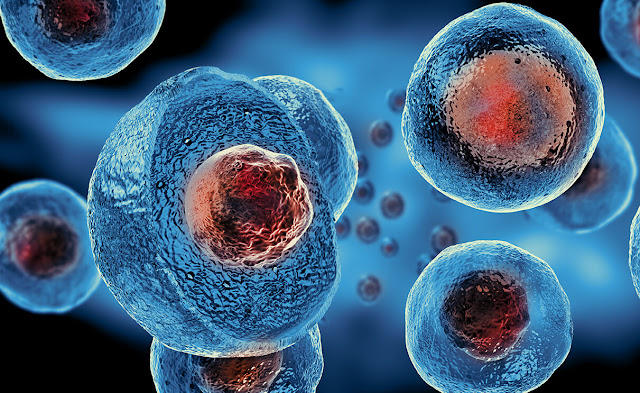
  Stem Cell Therapy In recent years, the field of healthcare has been witnessing a revolutionary approach with the advent of stem cell therapy. Stem cell therapy holds immense promise in treating a wide range of medical conditions and has the potential to revolutionize the way we approach healthcare. This cutting-edge therapy utilizes the remarkable abilities of stem cells to repair and regenerate damaged tissues, offering new hope for patients suffering from debilitating diseases and injuries. Stem cells are undifferentiated cells that have the unique ability to develop into specialized cell types in the body. They can be derived from various sources, including embryos, umbilical cord blood, and adult tissues such as bone marrow and adipose tissue. This versatility of stem cells makes them a valuable tool in regenerative medicine. One of the most promising applications of Stem Cell Therapy is in the treatment of degenerative diseases such as Parkinson's disease, Alzheimer...

The Science Behind Dye Sublimation Paper: Understanding the Transfer Process

Image
  Dye Sublimation Paper Dye sublimation paper, also known as transfer paper, is a critical component in the dye sublimation printing process. It plays a crucial role in transferring high-quality images onto various substrates, such as fabric, ceramics, metal, and more. This specialized paper is designed to absorb and hold the dye ink, allowing it to release the ink when subjected to heat and pressure. Dye sublimation printing is a unique method that utilizes heat to transform solid dye particles into a gas without passing through the liquid state. The gaseous dye then permeates the surface of the target substrate, creating vibrant and long-lasting prints with excellent color accuracy and detail. Dye sublimation paper acts as the carrier of the ink during the transfer process. One of the key characteristics of dye sublimation paper is its ability to maintain stability and prevent bleeding or smudging of the ink. The paper is typically coated with a special chemical layer that ab...

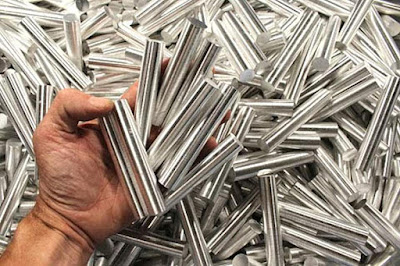
Magnesium Metal is a lightweight metal with structural applications

Image
                                                                                                     Magnesium Metal Magnesium is a chemical element with the atomic number 12 and the symbol Mg. It is a gleaming grey solid with many physical and chemical properties in common with the other five alkaline earth metals (group 2 of the periodic table). This element is created by the sequential addition of three helium nuclei to a carbon nucleus in large, ageing stars. When such stars erupt as supernovas, a large amount of magnesium is ejected into the interstellar medium, where it may recycle into new star systems. Magnesium is the eighth most abundant element in the Earth's crust and the fourth most abundant element in the Earth (after iron...

Hydrophobic Coatings is a thin layer that repels water on a variety of surfaces

Image
                                                                                                        Hydrophobic Coatings The term 'hydrophobic' refers to something that resists water or, more colloquially, something that is afraid of water. It is essentially a 20–30-nanometer transparent titanium dioxide coating placed on the surface of the lens in eyeglasses. Hydrophobic coatings are not new; people have been using them on their prescription eyeglasses for a long time. If you've ever noticed it, it's also found on leaves and the wings of many insects. This is why, due to the hydrophobic coating, a dragonfly can fly easily even when it is raining. Hydrophobic coatings have excellent physical properties such as abrasion, corros...

Smart Materials have the ability to change one or more properties when controlled external stimuli

Image
                                                                            Smart materials  Smart materials are those that have been manipulated to respond in a controllable and reversible manner, modifying some of their properties in response to external stimuli such as mechanical stress or temperature, among others. Smart materials are also known as responsive materials due to their responsiveness. These are commonly translated as "active" materials, but "reactive" materials would be more accurate. Smart materials for active coating are primarily active materials that deliver sensing and responding properties to textiles via traditional coating technologies (Singha, 2012). When exposed to a small stimulus, adaptive polymers can undergo significant and noticeable changes. As a result, adaptive...

Geotextile are one of the fastest growing sectors of the technical textile market

Image
                                                                               Geotextile Market Geotextiles are synthetic textiles that are permeable. It is typically made from polyester or polypropylene polymers. Geotextiles are used to improve soil stability, control erosion, and aid in drainage. Geotextiles can be made from a variety of polymers and manufacturing processes, making them useful in a wide range of civil construction applications. Geotextile and geosynthetics products like geogrids, geonets, and others can also be used in geotechnical and environmental engineering design. Geotextiles are an excellent barrier against erosion of earth embankments caused by currents, repeated drawdown, and wave action. A layer of geotextiles is used to prevent fine material leaching and to ma...

Protective Clothingis personal protective equipment that is designed to keep the wearer's body safe

Image
                                                                                                 Protective Clothing Market Protective clothing is designed to keep us safe from potentially harmful environments such as thermal, biological, chemical, or ballistic threats. Unfortunately, the materials and designs used for protective clothing impede the transfer of human heat and moisture to the environment. A good compromise must be struck between the two extremes of protection and human comfort. When working with chemicals with high acute toxicity and highly concentrated corrosive materials, chemical compatibility is used. When railings, floors, and nets cannot control fall hazards, fall arresting systems such as body harnesses, lifelines, and othe...

The Complete Guide To Graphene

Image
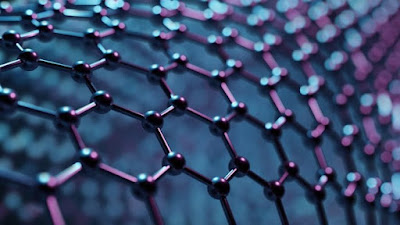
                                                                                                 Graphene Market A one-atom-thick layer of carbon atoms organised in a hexagonal lattice is known as graphene. It is the building block of graphite (which is used, among other things, in pencil tips), but graphene is a fascinating substance in and of itself, with a plethora of extraordinary features that have earned it the moniker "wonder material" on numerous occasions. At one atom thick, graphene is the thinnest material known to man. It is also tremendously strong, roughly 200 times stronger than steel. Furthermore, graphene is a good conductor of heat and electricity, as well as having remarkable light absorption properties. It is truly a substance...

Nanocoatings Are Been Used In Variety Of Sectors And Areas

Image
                                                                     Nanocoatings Nanocoatings are ultra-thin layers or chemical structures applied to surfaces using a number of techniques. Some nanocoatings are polymers that have been polymerized in situ or before being applied. A nanocoating, in technical terms, is a coating that is measured on the nanoscale. A coating that is no more than 1–100 nanometers thick is another industrial term. Nanocoatings are often utilised to provide a surface a specific chemical or physical purpose. They may, for example, impart hydrophobic and oleophobic qualities to increase corrosion resistance, insulative properties, or even conductivity. They can provide self-cleaning properties, as well as resistance to water, static, oil, scratches, bacteria, corrosion, fungus, friction, ...

Technical textiles applications are expanding with their unique characteristics and wide use in various industrial applications

Image
                                                Technical textiles Technical textiles are extensively used by other consumer industries mainly for their unique functional and aesthetic properties. The wide range of technical textiles based on the application characteristics, need of end-user and product feature us segmented into 12 categories. These include Thermal Fabrics, Anti-Oxidants, Condiment Fabrics, Building Materials, Furniture and Related Products, Flooring, Heating and Air-conditioning fabrics, Electrical and Electronic Components, Plastics, Paper Products, Plastic Unions, Packaging and Cartridges, Automotive, Marine and Cosmetallic Products, Cosmetics, Textile Technology and Vehicles. With all their uniqueness, all these textiles represent a very particular area of technical textiles . However, the widely evolved fabric industry makes these textiles useful ...

Aerospace materials have improved over the years with the development of novel materials having unique features of their own

Image
                                                              Aerospace materials Aerospace materials are often specific metals that have either been discovered, or are coming into prominence for their use in aerospace purposes. Numerous past aerospace materials are still used today as they possess space saving properties. The materials include Titanium, rubber, and composites. Some of the materials that were developed and used in the past and not in present time are ceramic tiles, glass, and synthetic leather. Aerospace materials come in extensive variety and all have created their unique profile. Some of the most common metals used for aerospace are rubber, titanium, and composite alloys. The properties of Titanium have been changed so that it can stand extreme conditions, including the high G-forces of space. As titanium is...

Aerogels Are Lightweight and Offer Low-Density and Low Thermal Conductivity

Image
                                                                         Aerogels An aerogel is an open-celled, mesoporous, solid foam that is composed of a network of interconnected nanostructures. Aerogels are used for commercial purposes in pellet form or in a composite with other materials. This translucent material is considered one of the finest insulation materials available. These nanostructures are produced by extracting the liquid component of a gel through supercritical drying or freeze-drying. An advantage to the use of aerogels in the home is that it can provide incredible levels of insulation. In fact, many people have compared the effects of having an aerogel-infused home to that of being wrapped in an extremely thick blanket.   Silica is combined with a solvent to create a gel. The mo...

Synthetic Zeolite: A molecular sieve in powder

Image
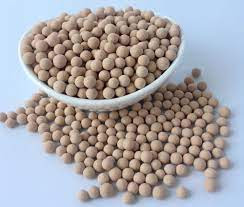
                 Synthetic Zeolite Synthetic zeolites, also known as molecular sieves, are crystalline aluminosilicates that are produced using a thermal process. Because of their attraction for water and other small diameter molecules, as well as their capacity to reject large diameter molecules, synthetic zeolites are appealing for drying and separation. Synthetic zeolites are a type of molecular sieve that is defined by the size and shape of the cavities in the channels. They are widely utilised as adsorbents and catalyst components. During the development of adsorbents and catalysts, it is necessary to choose between the tasks of preserving the initial pore structure and the adsorption ability of samples, or changing it deliberately to increase the yield of desired products, such as increasing para- selectivity in the isomerisation of alkylaromatic compounds. The crystalline structure of zeolite-containing systems has a direct impact o...

Conductive Carbon Blacks are the most reliable and cost-efficient choice for producing conductive compounds

Image
  Carbon black is primarily made up of a conductive form of carbon with a high specific surface area and a well-developed structure – microporosity. The grouping of carbon black makes it easier to build a conductive structure in plastics, rubbers, and other composites.   It helps to keep electrical items cool and maintain them by protecting them from mechanical harm. Conductive carbon black makes polymers conductive even at low loading levels, resulting in improved mechanical property retention. Jacket covers for high-power transmission cables, as well as protecting sensitive electronic components, are made of electrically conductive plastic.   For manufacturing conductive compounds, conductive carbon blacks are the most dependable and cost-effective option. Carbon black conductivity efficiency is influenced by primary particle size, structure, and porosity. Smaller black particles have a larger surface area and a stronger inter-aggregate attractive force.   C...

Popular posts from this blog

Revolutionizing Healthcare: Unleashing the Potential of Stem Cell Therapy

Why Laboratory Gas Generator Are Safe Choice

Diabetic Neuropathy: A Comprehensive Guide for Diabetic Patients